
Why Energy Efficiency Codes for Garage Doors in Virginia Matter More Than You Think
Understanding the energy efficiency codes for garage doors in Virginia is essential for any homeowner or property manager planning a new installation, replacement, or renovation project. These aren’t just bureaucratic hurdles — they directly affect your comfort, your utility bills, and your legal ability to sell or renovate your home later.
Here’s a quick summary of what Virginia requires:
| Requirement | Details |
|---|---|
| Governing code | 2021 Virginia Energy Conservation Code (VECC) |
| Effective date | January 18, 2024 |
| Applies to | New construction, additions, and qualifying alterations |
| Key standard for garage doors | U-factor and R-value minimums per climate zone |
| Virginia climate zone | Mostly Zone 4 (except Marine) |
| Relevant test standard | DASMA 105-2017 (thermal transmittance and air infiltration) |
| Enforcement | Local building departments statewide |
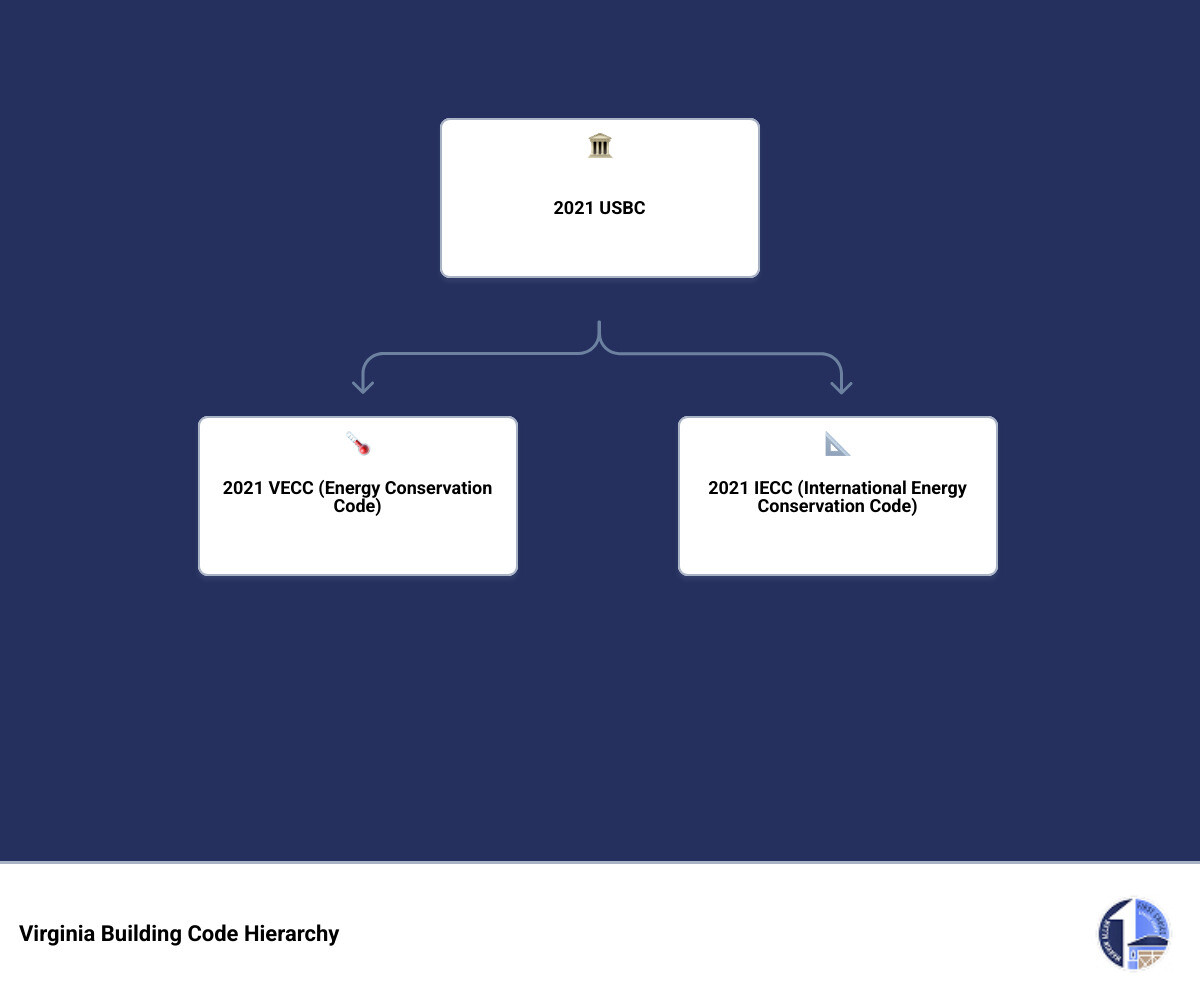
Virginia enforces a single statewide code — the 2021 Virginia Uniform Statewide Building Code (USBC) — which incorporates the 2021 International Energy Conservation Code (IECC) by reference. This means your garage door isn’t just a style choice. If it’s part of the building thermal envelope (especially in an attached garage), it must meet specific energy performance standards.
For most Virginia homeowners, this comes down to two things: how well your garage door insulates (R-value and U-factor) and how well it seals against air leakage. Both are regulated, both are inspected, and both matter for your home’s overall energy performance.
This guide walks you through exactly what the code requires, how it’s enforced locally, and what it means for your next garage door project.
Simple energy efficiency codes for garage doors in virginia glossary:
- garage door repair companies in Northern Virginia
- highly-rated garage door companies in Manassas, VA
- permit to replace garage door in Virginia
Understanding the Energy Efficiency Codes for Garage Doors in Virginia
The primary regulatory document governing building energy efficiency in the Commonwealth is the 2021 Virginia Energy Conservation Code (VECC), which is adopted as part of the broader 2021 Virginia Uniform Statewide Building Code (USBC). When you are planning a garage upgrade or building a new home in Northern Virginia, you must navigate these state-level mandates.
Under the USBC, energy efficiency rules apply to any component of a building that separates conditioned space (areas you heat or cool) from unconditioned space (like the outdoors or an unconditioned garage). While many homeowners assume that a garage door is exempt from these strict energy rules, its status as part of the “building thermal envelope” changes the game entirely.
To determine whether your specific project requires a building permit under these guidelines, you can read our detailed breakdown on how to check if you need a permit for a garage door in Virginia.
How the Energy Efficiency Codes for Garage Doors in Virginia Apply to New Construction
When building a new home in Northern Virginia, your design must comply with the prescriptive or performance requirements of Climate Zone 4 (Except Marine). In this zone, the building envelope must be tightly sealed and properly insulated to handle Virginia’s hot, humid summers and freezing winter nights.
If your new home features an attached garage, the garage door plays a critical role. While the door itself doesn’t always have to meet the same strict U-factor as a front entry door—provided the wall separating the garage from your living space is fully insulated—installing an insulated garage door is highly recommended. It acts as a buffer zone, reducing the temperature differential across that shared wall and lowering the load on your home’s HVAC system.
If you are heating or cooling the garage itself (making it a “conditioned space”), the garage door officially becomes part of the thermal envelope. In this scenario, the door must meet strict U-factor ratings. To understand why this thermal barrier is so critical, explore our guide on why you need garage door insulation.
Compliance Pathways Under the Energy Efficiency Codes for Garage Doors in Virginia
To prove that a garage door complies with the energy efficiency codes for garage doors in Virginia, builders and installers typically use one of two pathways:
- The Prescriptive Path: This is the most straightforward method. You select a garage door that has a certified U-factor or R-value that meets or exceeds the minimum requirements outlined in the 2021 VECC tables.
- The Performance Path (or Energy Rating Index): This pathway uses energy modeling software to analyze the entire home. If other areas of your home (such as high-efficiency HVAC systems or superior wall insulation) outperform the code, you may have more flexibility with your garage door selection, provided the home’s overall energy use remains below the target threshold.
Regardless of the pathway chosen, manufacturers must test their garage doors using the industry-standard DASMA 105 protocol (the test method for thermal transmittance and air infiltration of garage doors). If you are curious about how these rules compare to standards in other states, you can read our ultimate checklist for North Carolina garage door building codes.
Technical Standards: R-Value and U-Factor Requirements

When shopping for a code-compliant garage door, you will run into two technical terms: R-value and U-factor. Understanding the difference between them is crucial:
- R-value measures a material’s resistance to heat flow. The higher the R-value, the better the insulation.
- U-factor measures the rate of heat transfer through a complete door assembly. The lower the U-factor, the better the door prevents heat from escaping.
While R-value only measures the insulation inside the door panels, the U-factor takes into account the entire assembly, including the steel skins, hardware, window lites, and weatherstripping. The 2021 Virginia Energy Conservation Code relies heavily on U-factor ratings for official compliance.
| Door Type | Maximum Allowed U-Factor (VECC) | Recommended R-Value for Comfort |
|---|---|---|
| Swinging Opaque Doors | 0.70 | R-5 to R-8 |
| Roll-Up / Sectional Doors | 1.45 | R-9 to R-16+ |
For a standard sectional garage door separating an unconditioned garage from the exterior, a door with an R-value of 9.0 or higher is typically recommended to keep the space comfortable. If you want to see how these values translate to real-world performance, check out our article comparing insulated vs uninsulated garage doors.
In addition to insulation, the code addresses air leakage. Under NFRC 400 or DASMA 105 testing, garage doors must feature high-quality perimeter weatherstripping and bottom seals to prevent drafts. This is particularly important in Northern Virginia, where winter winds can easily force freezing air through minor gaps around your door.
Attached vs. Detached Garage Code Requirements
The distinction between an attached and a detached garage is one of the most important factors in determining which building and energy codes apply to your project.
 [ Detached Garage ] [ Attached Garage ]
+-------------------------------+ +-------------------------------+
| - Typically unconditioned | | - Shares walls with house |
| - Exempt from energy code | | - Fire barrier required |
| - Must meet wind-load rules   | | - Controls home heat loss |
+-------------------------------+ +-------------------------------+
Detached Garages
A freestanding, detached garage is generally treated as an unconditioned utility structure (Group U occupancy). Because it does not share a wall with your heated living space, it is typically exempt from the residential energy code’s insulation and thermal envelope requirements. However, you must still comply with local structural codes, such as wind-load ratings.
Attached Garages
An attached garage shares one or more walls with your home. Even if you do not actively heat or cool the garage, this space acts as a critical buffer zone. The USBC enforces strict rules here:
- Thermal Barrier: The shared wall between the garage and the home’s interior must be fully insulated and sealed.
- Fire Separation: You must install 1/2-inch gypsum board (drywall) on the garage side of the shared wall. The door connecting the garage to the house must be a self-closing, solid wood door (at least 1-3/8 inches thick) or a 20-minute fire-rated steel door.
- Ductwork Restrictions: To prevent carbon monoxide and toxic fumes from entering your home, HVAC ducts are not allowed to draw return air directly from the garage.
Choosing an insulated door for an attached garage solves several common household issues. To see how, read about why you want to have an insulated garage door and discover the problems that an insulated garage door can solve.
If you want a highly detailed regional comparison of how insulated doors perform across seasonal shifts, you may also find the Fayetteville homeowners guide to energy efficient garage doors a helpful resource.
Local Enforcement, Wind Loads, and Coastal Considerations
While the Virginia Uniform Statewide Building Code establishes consistent minimum standards across the Commonwealth, local building departments handle the actual enforcement, permitting, and inspections.
In Northern Virginia jurisdictions like Loudoun County and the City of Manassas, plan reviewers look closely at your construction documents to ensure that any new garage door meets both energy standards and local structural load requirements.
One critical structural standard is wind load rating. Loudoun County, for example, specifies a design wind speed of 115 MPH for residential structures (Risk Category II). This means any garage door installed in our region must be structurally engineered to withstand these wind pressures without buckling. In coastal areas of Virginia, such as Virginia Beach or Chesapeake, wind requirements are even higher, often requiring heavy-duty hurricane-rated doors with internal steel reinforcement.
When replacing or installing a door, your local building inspector may ask for the manufacturer’s specification sheet to verify both the wind-load rating and the U-factor. For a look at how administrative policies can vary across state lines, you can read about permit or no permit: Navigating North Carolina garage door rules.
Exemptions for Historic Districts and Retrofits
If you live in one of Northern Virginia’s many historic districts, or if you are retrofitting an older home, you may qualify for specific exemptions under the Virginia Existing Building Code (VEBC):
- Historic Districts: Properties subject to historic preservation guidelines (such as those overseen by local Architectural Review Boards) are often exempt from strict energy code mandates if modern compliance would compromise the historic character of the building. In these cases, finding a carriage-house style door that mimics historic wood but offers modern insulation is an excellent compromise.
- Retrofits and Repairs: If you are simply replacing a damaged panel on an existing, uninsulated door, you generally do not need to upgrade the entire system to meet modern energy codes. However, if you are replacing the entire door assembly, we highly recommend upgrading to a modern insulated model.
If you are weighing your options, take a look at these reasons you should get a new garage door to see how a modern door can improve your home’s security, curb appeal, and efficiency.
Frequently Asked Questions about Virginia Garage Door Codes
Do I need a permit to replace my garage door in Virginia?
In many Northern Virginia jurisdictions, a simple, like-for-like residential garage door replacement does not require a building permit, provided you are not structural altering the opening (such as widening the door) or modifying the electrical system. However, if you are installing a door in a newly constructed garage, converting a garage into a livable conditioned space, or adding a new automatic opener where no outlet exists, a permit is mandatory.
Always check with your local building office (such as the Manassas Building Development Division) before starting work. To learn more about how value-adding upgrades interact with local standards, read our guide on why your garage door upgrade is smarter than it looks.
What is the minimum R-value required for a garage door in Virginia?
For an unconditioned, detached garage, there is no state-mandated minimum R-value. However, for attached garages or conditioned spaces in Climate Zone 4, the 2021 VECC sets a maximum U-factor of 1.45 for roll-up sectional doors. To comfortably insulate an attached garage and protect your home’s thermal boundary, we recommend installing a door with an R-value of 9 to 16.
If you want to explore your insulation options, read our breakdown of the types of garage door insulation you can install.
Does Virginia require wind-load rated garage doors?
Yes. Under the Virginia Residential Code, garage doors must be designed to withstand the local wind load requirements of your specific county or city. In Northern Virginia, doors must typically be rated to withstand wind speeds of 115 MPH.
Ensuring your door is wind-load rated is a matter of basic home safety, as garage door failure during a major storm can lead to roof collapse due to internal pressurization. For more safety tips, check out the homeowners guide to garage door safety and our list of garage door safety tips to follow.
Conclusion
Navigating the energy efficiency codes for garage doors in Virginia doesn’t have to be a headache. By choosing a door with the right R-value, a certified U-factor, and the proper wind-load rating for Northern Virginia, you can ensure your home remains comfortable, safe, and fully compliant with the 2021 USBC.
At First Choice Garage Doors, we have spent years helping homeowners in Manassas and throughout Northern Virginia select and install high-quality, code-compliant garage doors. Our expert technicians handle everything from verifying local wind-load requirements to ensuring your new door is perfectly sealed against the elements. We pride ourselves on delivering unmatched expertise, quality, and stress-free service.
To keep your system running smoothly year-round, don’t forget to follow our garage door maintenance tips to ensure a long lasting door.
Ready to upgrade your home’s energy efficiency with a beautiful new garage door? First Choice Garage Doors Manassas VA is here to help. Contact us today to discuss your project and get a professional, code-compliant installation!